
Challenges with epilepsy diagnosis and monitoring
- Patient reporting and seizure diaries are inaccurate
- Uncertainty of treatment effect due to infrequent visits
- Access to EMU (Epilepsy Monitoring Unit) can be restricted – long waiting lists
- No seizures or atypical seizures during EMU stay
- There can be a lack of personnel to review video electroencephalography (EEG) monitoring data
- Events can be missed, even by most experienced people
- EMU can be located far from patient’s home
- Wearing EEG electrodes for extended periods is burdensome for the patients
Nelli uses an easy workflow and platform.
The combination of AI and human
expertise, without EEG, is revolutionary.
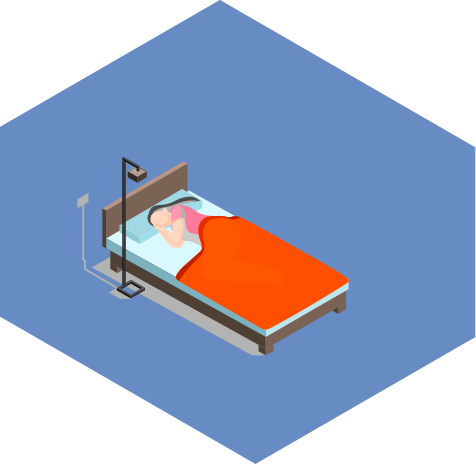
Record at home* or in hospital
The PRU -- which includes a computer, camera, and microphone -- is placed over the bed. No wearables are involved.

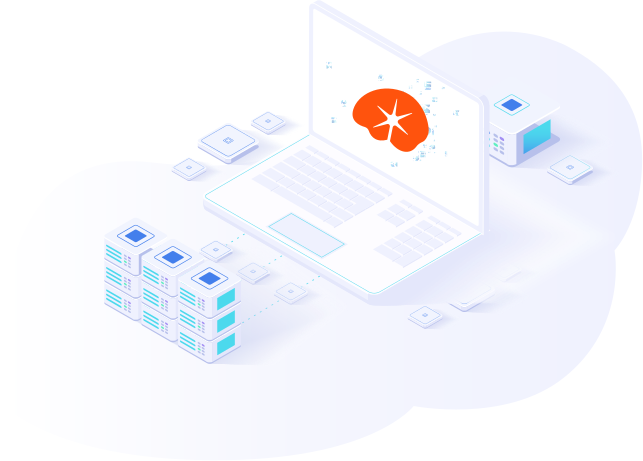
Advanced algorithms
A recording can last from days to months, depending on the use case. The captured data is run through a series of algorithms.

Expert review
Whether reviewed by your team or NEL's*, a human expert confirms the algorithmic findings to provide more accurate final results.
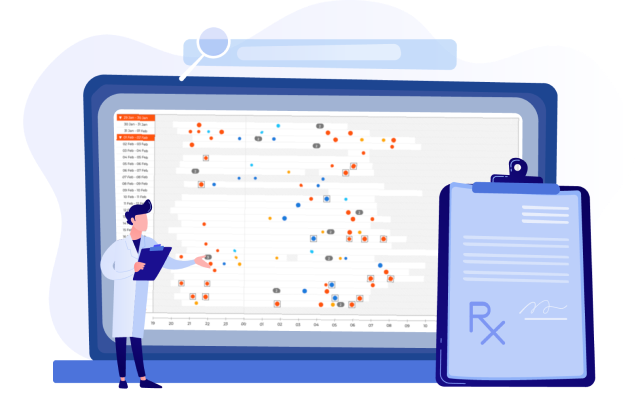
Interactive report and videos
The patient’s report can be accessed on an easy to use dashboard. It includes a detailed overview of events. The video of the event can be reviewed as well.
When is Nelli used?
Prescreening
An easy way to optimise the flow to the EMU, potentially eliminating the need for admission or allowing for better information when the patient gets admitted
Diagnosis
Helping with differential diagnosis, classification, quantification of seizure types and complex case analysis – all based on objective information.
Treatment effect
Effective way to assess effect of treatment and treatment changes. Complements seizure diaries which are inaccurate.
Nelli provides value
Thanks to its ease of use and convenient set-up, Nelli can reduce patient queues by extending monitoring access outside of the EMU. In addition, patients can be monitored more easily, which represents cost-saving for the hospitals and a decreased burden for patient and caregivers. Patients don't need to come to the hospital as frequently* and don't have to worry about counting seizures at night.
-

Faster, better diagnosis and follow-up
Better understanding the type and number of events helps the physician prescribe the right treatment – non-invasive monitoring helps to assess treatment effect and make adjustments which lead to better patient outcomes.
-
Safer
Eliminating the need to provoke seizures in the EMU removes the risks associated with the practice. Through long-term monitoring, titration and programming can be done with greater granularity, reducing the risk of harmful side effects.
-
Reduced burden for the patient
The patient can be conveniently recorded during periods of rest, and remote monitoring reduces the need for travel. Patients and caregivers don’t need to worry about counting seizures at night.
-
Cost-effective
Use of Nelli can reduce the need for prolonged, expensive hospital stays*.